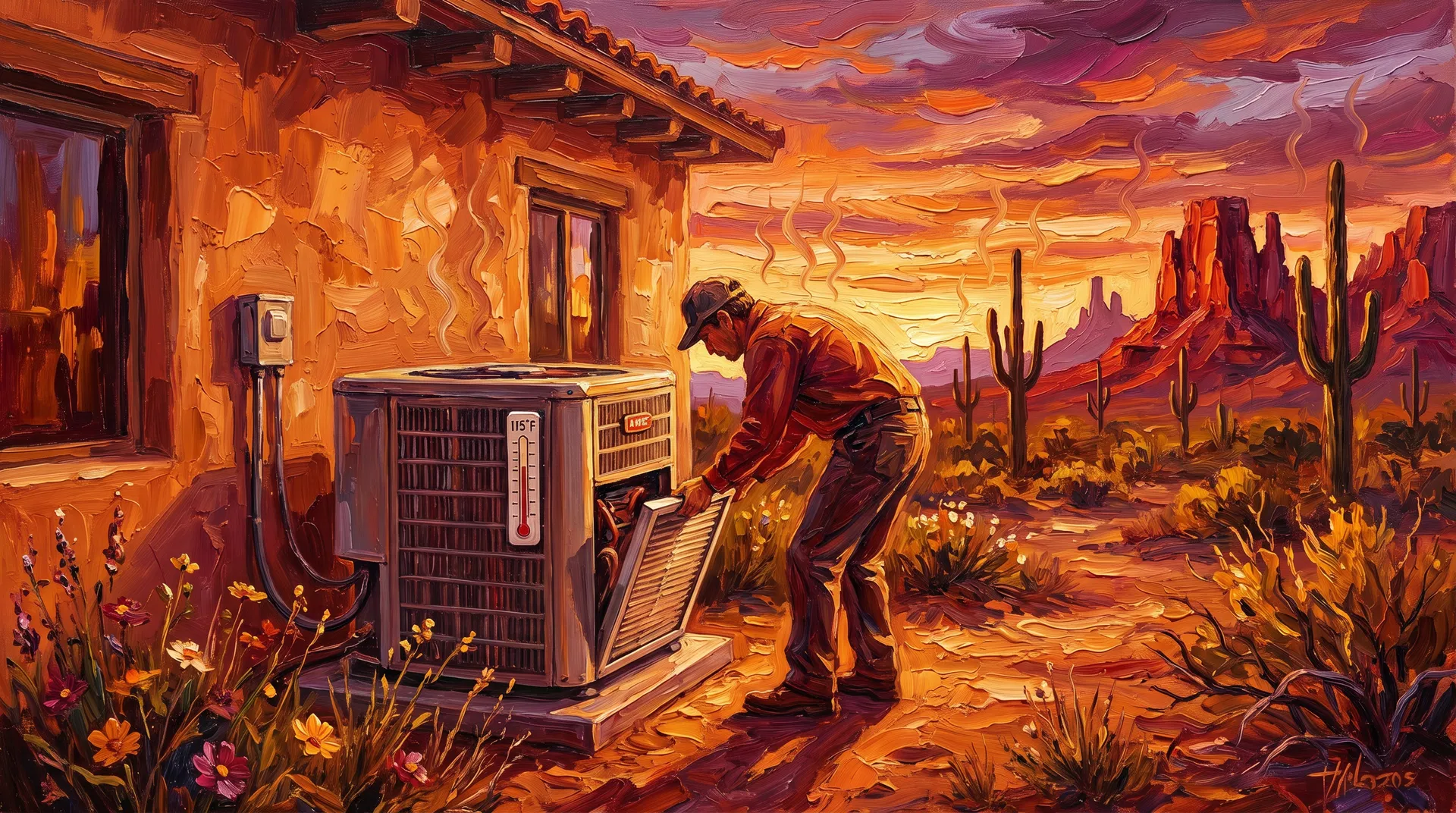
Beat the Heat: The Complete 2026 HVAC Preparation Guide for Arizona Homeowners
Phoenix shattered its earliest triple-digit record in March 2026. With 145 days of 100°F+ last year and heat-related deaths rising, your AC isn't a luxury — it's a lifeline. Here's the complete pre-summer HVAC checklist every Arizona homeowner needs.
Arizona's 2026 Heat Season Is Already Breaking Records
Phoenix shattered its earliest triple-digit record on March 18, 2026, when temperatures hit 101°F — beating the previous record of March 26, 1988 by over a week. As of mid-April, the Valley has already logged nine days above 100°F, and forecasters are warning that the summer of 2026 could rival or exceed 2025's punishing 145 days of 100°F+ temperatures.
Last year, Maricopa County recorded 427 heat-related deaths. The first heat-related fatality of 2026 was confirmed on April 10. These aren't just statistics — they're a reminder that in Arizona, your air conditioning system isn't a luxury. It's a lifeline.
The bottom line: If you haven't scheduled your pre-summer HVAC tune-up yet, you're already behind. Here's everything you need to do before the mercury climbs past 110°F.
The Pre-Summer HVAC Checklist Every Arizona Homeowner Needs
1. Change Your Air Filters — Today
This is the single most impactful thing you can do for your AC system, and it takes less than five minutes. During Arizona summers, HVAC experts recommend changing your air filter every 30 days — not every 90 days like the packaging suggests. Dust storms, pet dander, and the sheer volume of air your system processes in 115°F heat clog filters fast.
A dirty filter forces your system to work harder, reduces airflow by up to 15%, and can lead to frozen evaporator coils. A clean MERV 8-11 filter is the sweet spot for most Arizona homes — high enough to catch dust and allergens, low enough to maintain proper airflow.
Pro tip: Buy a 6-pack of filters now so you're stocked through October. Companies like Parker & Sons and Goettl Air Conditioning & Plumbing offer maintenance plans that include regular filter replacements.
2. Clear the Area Around Your Outdoor Condenser
Your outdoor AC unit needs at least two feet of clearance on all sides to breathe properly. Arizona's desert landscaping — gravel, dried leaves, palo verde pods, and tumbleweeds — tends to accumulate around condenser units over the winter months.
Trim back any bushes or plants encroaching on the unit. Hose down the condenser fins gently to remove dust buildup. If the fins are bent, use a fin comb (available at any hardware store) to straighten them. Blocked or damaged fins reduce heat transfer efficiency, which means your system runs longer and your SRP bill climbs higher.
3. Schedule a Professional Tune-Up Before the Rush
Every HVAC professional in the Valley will tell you the same thing: schedule your tune-up in April, not June. By the time temperatures hit 110°F, every HVAC company in Phoenix is booked solid with emergency repair calls, and wait times can stretch to days.
A professional tune-up typically includes checking refrigerant levels, inspecting electrical connections, cleaning coils, testing the thermostat, and verifying that the system cycles properly. This annual investment of $75-$150 can prevent a $3,000-$8,000 emergency replacement in July.
Here are some of the highest-rated HVAC companies across the Phoenix metro area:
| Company | Location | Rating | Reviews |
|---|---|---|---|
| Day & Night Air Conditioning | Phoenix | 4.9 | 9,048 |
| Hobaica Services | Phoenix | 4.9 | 6,902 |
| Canyon State Service Experts | Surprise | 4.9 | 2,473 |
| Hansen Family Plumbing & Air | Mesa | 4.9 | 1,389 |
| Scottsdale Air Heating & Cooling | Scottsdale | 4.9 | 1,362 |
| Tucker Hill Air, Plumbing & Electric | Tempe | 4.8 | 1,734 |
Browse all 38 HVAC companies on SeekZona →
4. Check Your Thermostat Settings and Consider an Upgrade
If you're still running a basic programmable thermostat, this is the year to upgrade to a smart thermostat. The Salt River Project (SRP) and Arizona Public Service (APS) both offer rebates on qualifying smart thermostats, and the energy savings typically pay for the device within one cooling season.
Recommended settings for Arizona summers:
- When home: 78-80°F (SRP's official recommendation)
- When away: 85°F (don't turn it off — restarting from 95°F+ costs more than maintaining 85°F)
- Fan setting: Auto, not On (running the fan continuously adds $30-50/month to your bill and reintroduces humidity)
- Supercooling strategy: Pre-cool your home to 76°F during off-peak hours (before 3 PM), then let it coast through peak pricing hours
5. Inspect Your Ductwork for Leaks
Here's a stat that surprises most homeowners: leaky ducts waste 20-30% of your cooled air before it ever reaches your living spaces. In a state where cooling accounts for 50-60% of your summer electric bill, that's hundreds of dollars literally blowing into your attic.
Signs of duct leaks include rooms that never seem to cool down, excessive dust around vents, and unusually high utility bills. A professional duct inspection and sealing typically costs $300-$500 and pays for itself within one summer. Companies like ACE Home Services and Penguin Air offer comprehensive duct inspections as part of their maintenance packages.
6. Listen for Warning Signs
Your AC system will tell you when something's wrong — if you know what to listen for:
- Grinding or squealing: Worn bearings or a failing blower motor
- Clicking at startup: Potential relay or electrical issue
- Hissing or bubbling: Refrigerant leak (this is an emergency — low refrigerant damages the compressor)
- Musty smell: Mold in the ductwork or drain pan
- Burning smell: Overheating motor or electrical issue — turn off the system immediately
If you hear or smell anything unusual, don't wait. A $200 repair in April becomes a $5,000 compressor replacement in August. George Brazil Air Conditioning & Heating and Precision Air & Plumbing both offer same-day diagnostic appointments.
When It's Time to Replace: What Arizona Homeowners Should Know
If your AC system is 10-15 years old, it's approaching the end of its expected lifespan — and Arizona's extreme heat accelerates wear faster than moderate climates. Here's what to consider:
SEER ratings matter more in Arizona than anywhere else. A system with a 14 SEER rating (the current federal minimum) will cost significantly more to operate than a 16-20 SEER unit. In a state where your AC runs 8-10 months per year, the efficiency difference translates to $400-$800 in annual savings.
Don't wait for a catastrophic failure. Planning a replacement in spring gives you time to research options, get multiple quotes, and schedule installation at your convenience. Emergency replacements in July mean paying premium prices and taking whatever unit is in stock.
Check for utility rebates. Both SRP and APS offer rebates of $200-$1,000 for high-efficiency system upgrades. Some HVAC companies, including Hays Cooling Heating & Plumbing and Cool Blew, help customers navigate the rebate process.
Beyond HVAC: Complete Heat Preparedness
Your AC system is the foundation, but comprehensive heat preparedness includes:
- Window treatments: Blackout curtains or solar shades on south- and west-facing windows can reduce indoor temperatures by 10-15°F
- Seal gaps: Weather-strip doors and windows to prevent cool air escape
- Shade structures: Patio covers and shade sails reduce outdoor ambient temperature by 15-20°F
- Mister systems: Essential for outdoor living spaces; many landscaping companies install permanent misting systems
- Pool maintenance: A well-maintained pool is Arizona's best heat relief — browse pool services near you
- Emergency kit: Keep extra water, battery-powered fans, and a plan for power outages
Take Action Now — Before the Heat Makes the Decision for You
Arizona's summer doesn't negotiate. When your AC fails at 3 PM on a 118°F Saturday in July, you'll wish you'd spent the $100 on a spring tune-up. The HVAC companies listed on SeekZona are vetted, reviewed, and ready to help you prepare.
Find a trusted HVAC professional near you →
Sources: Arizona Republic, FOX 10 Phoenix, Salt River Project, U.S. Department of Energy, Maricopa County Department of Public Health